
In Defense of the Simple Sentence
In seventh grade, Mrs. Young taught me how to dissect a sentence.
From a dingy third-floor classroom at Lexington Junior High School’s eerie Red Brick Building, I watched as she demonstrated a systematic process for mapping out the English language.
To a restless bunch of adolescents, the notion of diagramming a sentence felt unnecessarily complicated and pointless. To me, it was a revelation…a framework for organizing my thoughts.
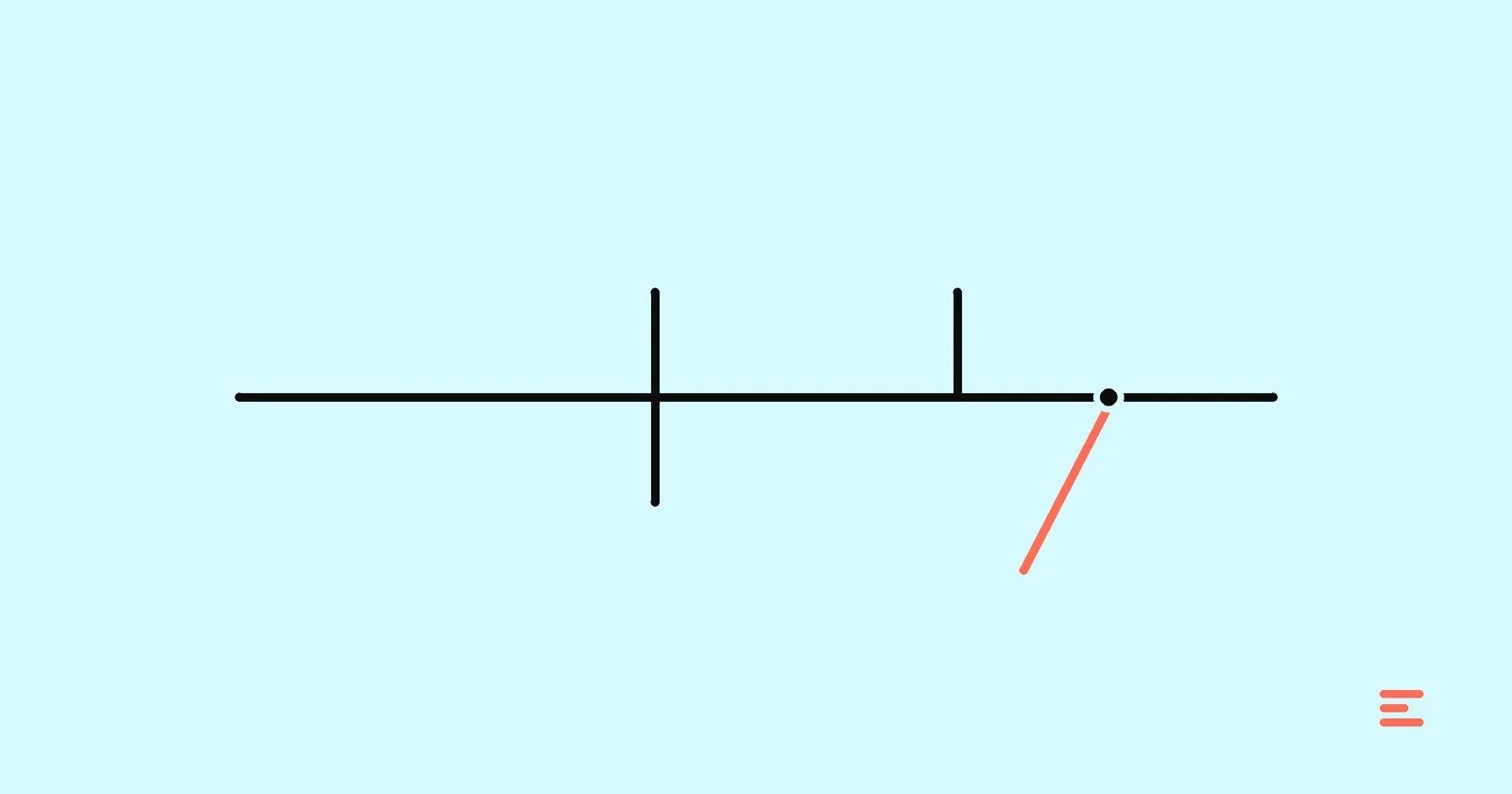
Sentence diagramming—for those who've forgotten it or never learned—is a visual map of how the words in a sentence relate.
A simple sentence maps easily. The subject sits on a horizontal line at the left, the verb in the center, the object at the right, with vertical lines dividing them.
See Exhibit A, below.

Clear. Uncomplicated. Easy to understand.
Because of the grammatical intricacies of the English language, the process gets far more complicated as sentences become cluttered with adjectives, adverbs, prepositional phrases and complex clauses.
Beyond the lines and symbols
Decades after learning to diagram sentences, I still mentally reference the process in structuring my own thoughts—or restructuring the thoughts of others.
If I can’t figure out how to diagram a sentence, it’s a major red flag.
Today’s AEC firms are awash in crimson. Everywhere I look, I see pompous vocabulary, convoluted clauses and endless jargon—all in a bid to demonstrate authority or intellectual rigor.
Instead, what readers usually detect is someone working too hard to sound smart and sophisticated. That creates a barrier between the author and the very audience the piece is meant to reach.
Below is Exhibit B, a 26-word sentence used by an unnamed AEC firm in touting its sustainability expertise. Candidly, I’d say it fails to effectively convey its intended message.
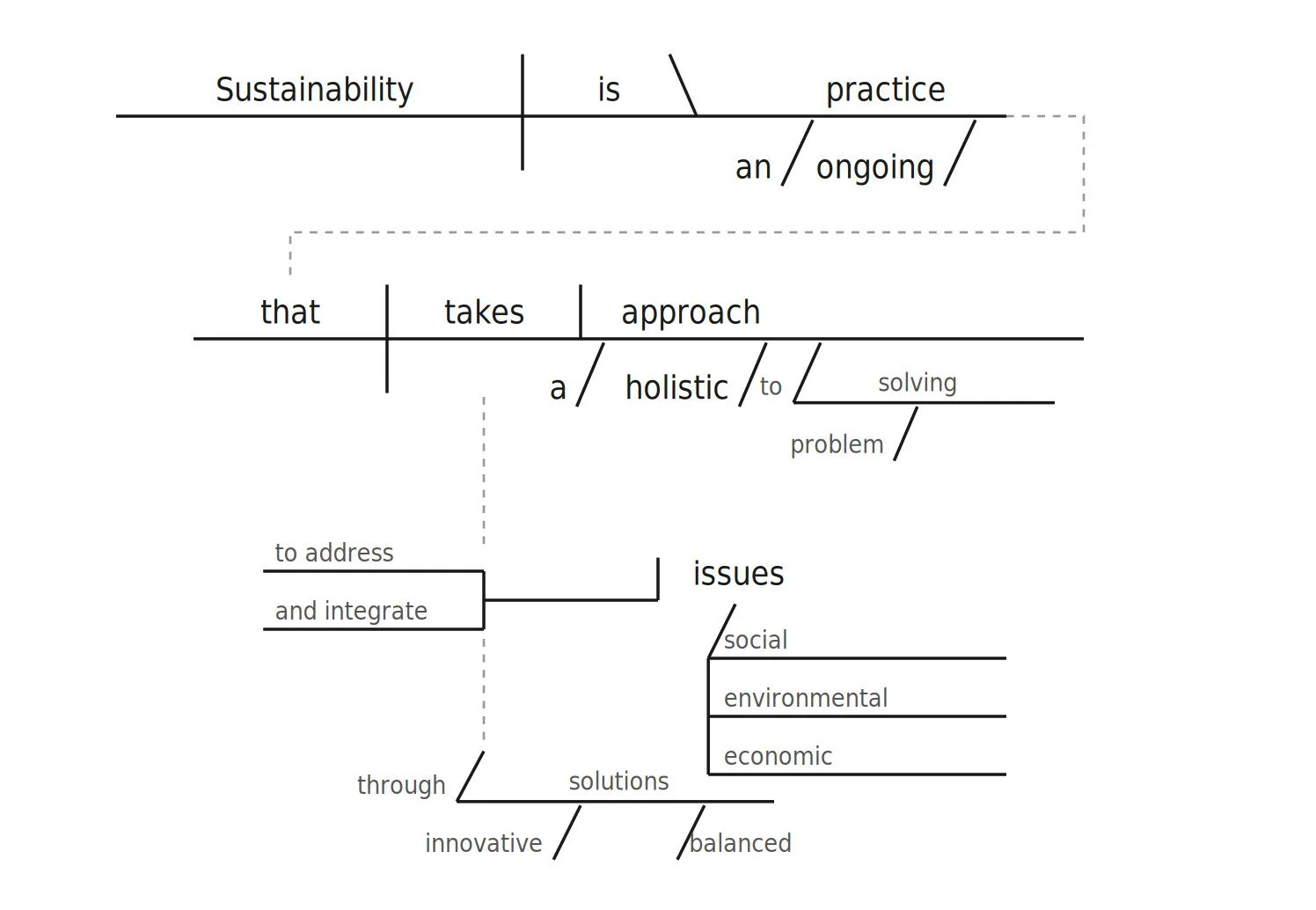
This is a single sentence.
Here’s a quick rewrite: “Sustainability means weighing social, environmental and economic tradeoffs together.”
Nine words. Same meaning. One line on the page.
I’d be lying if I claimed to never commit a similar misstep in my daily work. It’s far too easy to get so close to a client, a project, a topic that I lose sight of the reader. Guilty as charged.
Simplifying a thought takes discipline. It requires stripping away the urge to grandstand until only the essential structure remains.
In today’s content-polluted world, we’d all be wise to step back and simplify our words, our sentences and our paragraphs.